Our Daily Bread Ministries Canada logo
Engage / Authors / Elisa Morgan

Elisa

Morgan

Elisa Morgan (MDiv) was named by Christianity Today as one of the top 50 women influencing today’s church and culture. She has authored more than 25 books including The Beauty of Broken, Hello, Beauty Full, When We Pray Like Jesus, You Are Not Alone and Christmas Changes Everything. For 20 years, Elisa served as CEO of MOPS International and now is President Emerita. She speaks internationally, writes for Our Daily Bread, and co-hosts the Discover the Word and God Hears Her podcasts for Our Daily Bread Ministries. You can find out more about Elisa, book her to speak at your event and sign up for her blog, Really, which reaches thousands at www.elisamorgan.com. Follow her on Facebook and Instagram. With her husband of more than 40 years, Evan (Vice President of Online Learning for Our Daily Bread Ministries www.odbu.org), she has two grown children and three grandchildren who live near her in Denver, Colorado. Her constant companion is Mia, a rough-coat Jack Russell Terrier.

Posts by Elisa

Morgan

Filters
Date

Filters
Date
Search

God’s Provision

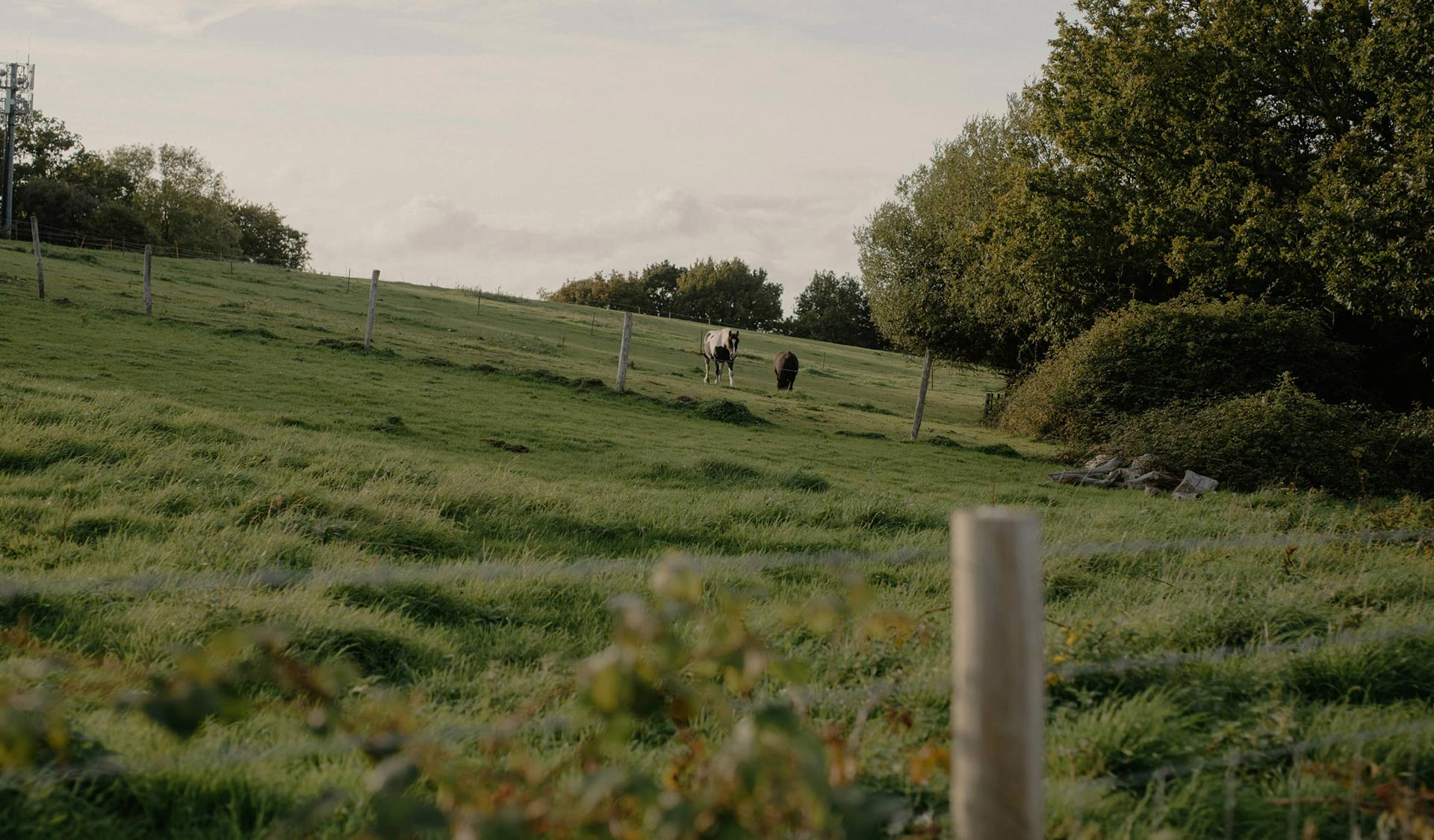
I was putting my grandson to bed during a sleepover. When his Bible bookmark opened to Psalm 23, he objected, “We already read this one.” After I suggested we might learn something new, he read aloud, “The Lord is my shepherd, I lack nothing. He makes me lie down in green pastries.” Green pastries?! I explained that the word was pastures, not pastries. Hours earlier, he’d stood before a bakery shelf, selecting treats. His interpretation came into focus: to him, a bakery conveyed a place of rest and enjoyment.

Psalm 23 may be so familiar to us that we miss its deep offering. David, a king well acquainted with shepherding, describes God’s provision over a lifetime of things both idyllic (vv. 5-6) and challenging (v. 4). He points out that our good God leads us to places where we can partake of His presence, be rejuvenated, and prepare for what will come. Green pastures (v. 1) and still waters (v. 2) are such dwellings for sheep, and we are God’s sheep.

My grandson’s innocent interpretation opened my eyes to the “green pastures” God provides for me—places of rest and enjoyment in everyday life where He restores me. A gold-hued sunset. A verdant field. A quiet corner. A bakery shelf of green pastries, wafting out delight. I’m so glad we read Psalm 23 again!

The Answers God Provides

“What’s my birthmother’s name?” My seven-year-old daughter’s sincere question pierced my heart. Ours had been a private adoption where we were provided only the most basic of information about her parents: height, weight, age, color of hair and eyes. How was I to respond? The question felt impossible! I drew in a breath and prayed, “God, what do I say?” A sentence tumbled out of my mouth, “What would you like her name to be?” She beamed at me and proclaimed, “Madeline!” “Then, Madeline it is!” I declared. In just a few minutes, I believe God had provided an answer when I didn’t have one. 

In the years after His death, Jesus’ followers would encounter great challenges where they needed God’s answers in seemingly impossible situations. In John 14, Jesus promised He would not leave them alone but would come to them with help (v. 18). Further, God would provide an ongoing flow of help: “The Advocate, the Holy Spirit, whom the Father will send in my name, will teach you all things and will remind you of everything I have said to you” (v. 26).

Sometimes the questions we face seem impossible to answer. We need God’s help and answers with our children, our work, our neighbors and our world. When we don’t have the answers, He can provide them.

Listening to the Good Shepherd

I opened my online banking app and discovered two withdrawals over $500 each, which I hadn’t made. Panicked, I called the bank and discovered my identity had been stolen. With the bank’s help, I was able to reinstate my good standing, but the experience taught me to be alert to prevent such thefts in the future.

In John 10:10, Jesus warned, “The thief comes only to steal and kill and destroy.” Rebuking religious leaders who opposed Him for healing on the Sabbath (9:13-15), Jesus revealed their motive: to steal, kill, and destroy. Our spiritual enemy, Satan, plots to steal our understanding of God’s grace—and the freedom Jesus’ death provides for us. Hope and help come earlier in the passage where Jesus described Himself as the good shepherd who calls His sheep by name (10:2-4). The good shepherd’s sheep “will run away from [a thief] because they do not recognize a stranger’s voice” (v. 5).

We sometimes find ourselves victimized by the evil in our world. But our loving God invites us into a practice of discernment where we learn to recognize and avoid the voice of our enemy who wants to steal, kill, and destroy. As we tune our ears to the voice of our Good Shepherd, we can trust Him to lead us to life “to the full” (v. 10).

Caring and Communion

When I broke my upper arm, my friend Rex surprised me by shipping a care box of frozen soups with a beautiful silver ladle. I was deeply touched and kept the ladle long after consuming the soup. My arm has healed and dear Rex has since passed away but his gesture of love continues to express God’s love for me. Every time I lift the ladle, I thank God for His love to me through my friend.

Jesus gave us a tangible gift in the celebration of communion to help us remember His incomparable love for us (Luke 22:19). The apostle Paul reminded the Corinthians how Jesus broke bread saying, “This is my body, which is for you; do this in remembrance of me” (1 Corinthians 11:24). Then Christ “took the cup, saying, ‘The cup is the new covenant in my blood; do this, whenever you drink it, in remembrance of me’” (v. 25). God’s lavish love is remembered again and again as we take the bread and lift the cup as believers in Christ.

Rex showed his love through the tangible gift of a care box, leaving a ladle to remind me month after month. Jesus loved us in the life-altering gift of His body sacrificed on the cross for our sins. He left us the practice of communion to remind us of His unchanging love.

The Unnamed Women

After wiping down tables with disinfectant, Shelia stooped to tie a garbage bag filled with used cups and plates. She heaved the bag over her shoulder and turned to survey the church’s multipurpose room. She’d volunteered to clean it for the next gathering and wanted to make sure it was ready. A thought fluttered through her mind: Would anyone notice?

It’s easy to wonder if our everyday contributions to the kingdom are valued. Whether we clean, balance spreadsheets, lead a Bible study, or give money, so many of us remain unseen in our places of service and unnamed in public commendations.

In Luke 8:1-2, the historian catalogs the faithful service of women in the ministry of Jesus. He lists three by name: Mary of Magdalene who was among the women freed of evil spirits and diseases; Joanna the wife of Chuza, who managed Herod’s household; and Susanna. Then Luke says, “Many others . . . were helping to support [Jesus and His disciples] out of their own means” (v. 3). Luke spotlights these unnamed women who invested themselves in supporting the gospel, and so underlines their value.

Just as God includes unnamed women in His account of valuable contributions to His kingdom, He sees our efforts. He knows our names (John 10:3), and He sees our investment in His work (Hebrews 6:10).

Prayer Walk

I was stuck. I’d written half of a devotional article when my thoughts dried up. “God, what should I do?” I prayed. Remembering research that found that our creative output is boosted by an average of sixty percent when we walk, I headed out to the trail behind my house and continued my conversation with God. Thirty minutes later I was refreshed. I returned to my keyboard and finished the entry.

In the book of 2 Kings 4:20-35, we read that Elisha and his servant, Gehazi, responded to a Shunammite woman’s plea to help her dead son. At Elisha’s instruction, Gehazi laid his staff on the child (v. 31). They prayed. Then Elisha laid on top of the boy. At last, “Elisha walked back and forth in the room and then got on the bed and then stretched out on him once more . . . and the boy opened his eyes” (v. 35).

Scripture doesn’t tell us why Elisha “walked back and forth,” nor does it say what he was thinking. What we do know is that when Elisha’s prayers weren’t answered, he didn’t give up. It’s not difficult to picture him talking to God in this urgent situation.

What do you do when you’re stuck at a dead-end and don’t know what to do? Perhaps a “prayer walk” is in order. Whether we head out to a trail for a walk or pace back and forth in our home, connecting to God when we’re in need brings answers that address our circumstances.

Be Like Jesus

The tall passenger seemed to unfold as he stood up in the aisle of the small regional jet. Then I noticed the title of his boldly displayed book: Be Like Jesus. A few minutes later, I saw that same man push others aside to grab his bag off the waiting trolley. Be like Jesus? I didn’t know if he was truly a “brother” who knew Christ, but I was dismayed by this display of selfishness that misrepresented Jesus.

As my feet hit the escalator, I saw the man again, book cover still visible. The words then elbowed my own heart. Be like Jesus, Elisa. Don’t judge. I wondered, was my presence emanating anything of Jesus?

Becoming like Jesus is a transformational process—a metamorphosis—of God growing His character in us as we yield to His ways. Paul wrote that believers in Jesus “are being transformed into his image with ever-increasing glory, which comes from the Lord” (2 Corinthians 3:18). John marvels at how hard this is for us to understand—much less achieve: “Now we are children of God, and what we will be has not yet been made known. But we know that when Christ appears, we shall be like him [similar to Him in purity], for we shall see him as he is” (1 John 3:2–3). 

As the escalator spilled us out, I glanced again at the book. Be like Jesus—the words took on new meaning for me and redirected my gaze to my own heart and life.

An Empty Juice Box

When I led a ministry for moms of preschoolers, we hunted for an image to describe the unending demands that mothers experience. Changing diapers. Wiping noses. Picking up toys. It turns out the image was right in front of us: a disposable juice box, collapsed in on itself. Moms can feel like empty juice boxes. That ministry served moms by leading them to the Source of living water that can fill them to the full—Jesus.

In John 7, Jesus went to the Festival of Tabernacles (v. 12), commemorating God’s provision during the Israelites’ wilderness wanderings. This festival included a water-pouring rite symbolizing the fruitfulness that only moisture produces and foreshadowed the spiritual rain the Messiah would bring. Jesus fulfills what the ancient festival anticipated. “Let anyone who is thirsty come to me and drink. Whoever believes in me, as Scripture has said, rivers of living water will flow from within them” (vv. 37-38).

At times, we can feel like empty containers. Weary from caregiving. Worn from working. Exhausted by everyday responsibilities. The unending demands draw us dry! But when we live in relationship with God, He provides springs of living water within our heart to refresh and refuel us no matter how many cares and concerns try to drain us.

Imposter Syndrome

Do you ever feel like a fraud? You aren’t alone! In the late 1970s two researchers identified “imposter syndrome” as the condition of doubting one’s skills, talents, or abilities and interpreting ourselves as a fraud. Even successful and brilliant people struggle with inadequacy, worrying that if anyone peeked behind the curtain of their lives, they’d see how much they don’t know.

Paul exhorts the people of the first-century church in Rome to be humble. “Do not think of yourself more highly than you ought, but rather think of yourself with sober judgment” (Romans 12:3). We understand the importance of not elevating our abilities. But when we doubt our own value, we go too far, robbing others of the gifts God wants us to use to serve Him. To think of ourselves with “sober judgment” (v. 3) is to have a sane estimation—a realistic regard—for what we offer. Paul nudges us to overcome our hesitancies, to embrace who we are “in accordance with the faith God has distributed to each of you” (v. 3). In this way, God’s body of believers may be built up (vv. 4–8).

Rather than degrading our offerings with imposter syndrome, let’s embrace God’s giftings within us. By gratefully accepting God’s grace, we can think neither too highly nor too lowly of ourselves. In doing so, we please our Father and build up His body of believers.

Sympathy Pain

When I injured my ring finger, I expected months of pain before regaining its full function. As I practiced the prescribed exercises the finger next to it began to throb, so I consulted my doctor. “Sympathy pain,” he said. A branching between the nerves of the ring and pinky fingers causes dependence on one another. If one finger hurts, the other aches in sympathy.

The apostle Paul uses the human body to illustrate the uniqueness and unity of God’s people. In 1 Corinthians 12:21–26, he reinforces how valuable each individual member is to the healthy functioning of the whole. Then he turns his attention to the unity achieved when we connect with each other. “If one part suffers, every part suffers with it” (v. 25). His description of the church’s interconnectedness is echoed in these verses, “mourn with those who mourn,” and “carry each other’s burdens” (Romans 12:15; Galatians 6:2).

Today, as I extend my hand to greet someone or grab a spoon to prepare a meal for guests, I notice the strain in both my ring finger and my pinky. The various parts of our physical bodies work together to express pain and to strengthen each other toward health. I thank God that He reveals our need for connection to each other in His spiritual body, the church, through sympathy pain.