

Our Daily Bread Ministries Canada logo
Engage / Authors / Karen Pimpo

Karen

Pimpo

After growing up in the greater Chicago area, Karen adopted Grand Rapids, Michigan as her home. She works in project management in the world of marketing communications, helping for-profit and nonprofit organizations tell their stories in a compelling way. Outside of work, Karen is a proud member of the Grand Rapids Symphony Chorus. She’s a big fan of second breakfast, walks through the woods, and discovering new music.

Posts by Karen

Pimpo

Filters
Date

Filters
Date
Search

Harvest His Blessing

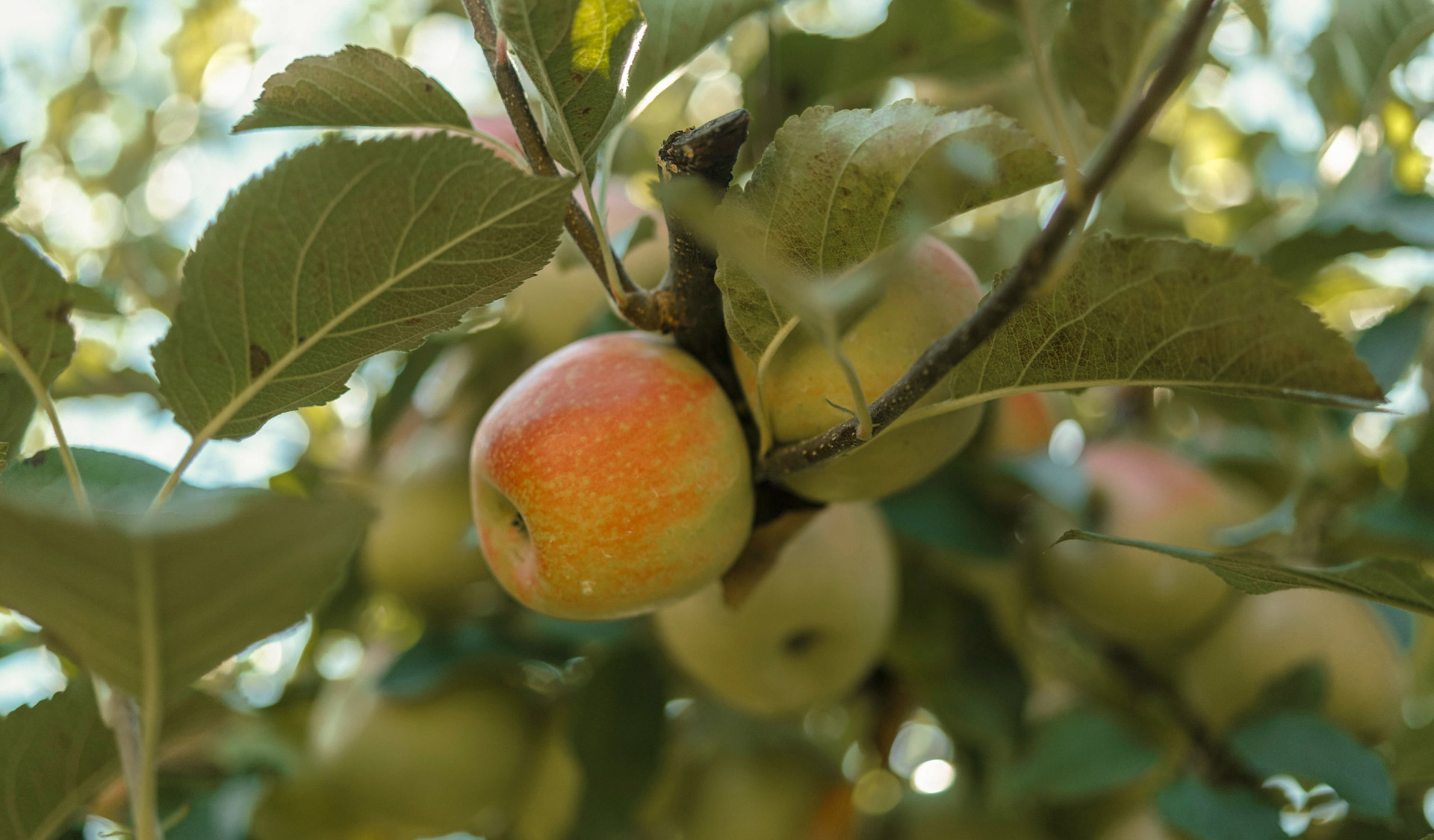
Alan is a fifth-generation fruit farmer who manages his family’s cherry, peach, and apple orchard. Over the years, his family has perfected growing trees with maximum yield. They’ve carefully planted saplings for the future, put up a deer fence, and invested in special fans that help keep the air warm when frost threatens their crops. Even so, they’re never assured of a good harvest. Factors like weather, pollinators, and disease are beyond their control.

All of nature is under God’s control. He knows we need physical provision like healthy crops, but He encourages us to look even higher to the ultimate good—Himself. The book of Leviticus contains decrees that God gave the Israelites governing everything from sacrifice and worship to relationships and criminal justice. Obeying His direction would lead to blessing, including provision of a bountiful harvest (26:3-4), but disobedience would result in a curse, where their enemies would enjoy the fruit of their labor (v. 16). More than just plentiful crops (v. 10), God’s blessing included a promise to dwell with His people (v. 11) and look on them “with favor” (v. 9). The Israelites messed up again and again. So will we. But we can repent, submit, and turn back again to enjoy the gift of His presence (vv. 40-42), manifested in Jesus and now expressed through the Holy Spirit.

Lives Offered to God

“I am thankful to God for His goodness,” reads the plaque, “in permitting me to have a part in building this broad thoroughfare as a frame to the beautiful picture which He created.” The inscription is attributed to highway engineer Samuel Christopher Lancaster in 1915. It stands at a beautiful scenic overlook on the highway he designed, a road that takes drivers along the breathtaking Columbia River Gorge with forests, waterfalls, and rocky cliffs.

It’s tempting to take credit for our resources and accomplishments or use them to bring ourselves praise. What would it look like, instead, to think of them as a lowly “frame” around God’s masterpiece? One example is when Moses invited the Israelites to bring gifts to build the temple (Exodus 35:5). “Everyone who was willing and whose heart moved them” contributed what they had: precious metal and stone, linen, leather, wood, spices, and oil (vv. 20-28). These costly goods were offered from willing hearts to fulfill what God had commanded (v. 29). Some master craftsmen were especially gifted. But everyone could contribute something, like the women who skillfully spun goat hair (v. 26).

What mattered most then, and today, is the posture of the giver’s heart. “From what you have, take an offering for the Lord” (v. 5). That’s when our resources are put to their best use.

God’s Eternally Beloved

One of the most dramatic and mysterious love letters of all time was penned by composer Ludwig van Beethoven and was only discovered after his death in 1827. The hastily handwritten letter is full of passionate lines like, “My eternally beloved . . . I can only live either wholly with you or not at all.” Tragically, it appears the letter was never sent, and his intended recipient remains unknown. 

Beethoven’s letter is treasured by readers who can identify with his desperate yearning for love. We seek love and fulfillment in many people, things, and experiences that cannot fully satisfy. But far greater than a fleeting romance is the love of God for His covenant people, to whom He showed great love for the sake of all people. Through the prophet Jeremiah, God declared, “I have loved you with an everlasting love; I have drawn you with unfailing kindness” (Jeremiah 31:3). Because of His great love, God promised a future of rest and favor (v. 2) and the restoration of anything that was broken (v. 4). Despite their repeated rejection and rebellion, God vowed to bring them back to Himself (v. 9).

Many years later, that same everlasting love motivated Jesus to endure death for sinners, even before we ever returned His love (Romans 5:8). We don’t have to search for love or try to earn it. We’re already loved with an everlasting love!

Mercy and Our Mess

During Sunday school, my patience with three-year-old Peter was wearing thin. He was unhappy, unkind to the other kids, and absolutely refused to be content, even when we offered him the most coveted toys. My pity turned to annoyance. If he stubbornly persisted in being difficult, then fine, I’d send him back to his parents and he would miss out on all the fun.

Too often I find my compassion has conditions. If someone ignores my advice or refuses my help, then they don’t deserve it anymore. Fortunately, God doesn’t act that way toward us. The prophet Jonah experienced His great mercy after a time of stubborn disobedience when God commanded him to travel and preach to Nineveh. Defiantly choosing the opposite direction, Jonah was caught in a terrible storm, set adrift at sea, and then swallowed by a great fish—a self-made disaster. When Jonah finally “prayed to the Lord his God” (Jonah 2:1), God was still listening to him, ready to forgive His reluctant prophet. Jonah was delivered from the fish and graciously given a second chance to go to Nineveh (3:1).

In little Peter’s case, a special trip to the playground consoled him—a brilliant and kind idea by a helper with more patience than I had shown. How beautiful is mercy that continually seeks us out, even in the middle of our own mess.

Jesus, the Greatest Gift

“What sweeter music can we bring / Than a carol for to sing / The birth of this our heavenly king.” The lines of this 17th century poem “What Sweeter Music” were reimagined by modern-day choral composer John Rutter to become an Advent season favorite. Its gentle melody describes a long, cold season of waiting that’s thawed by the springtime feeling of Jesus’ arrival. The singers bring Him a Christmas carol; the listeners are invited to bring their hearts.

Rutter’s arrangement was commissioned to correspond with a church reading on the wise men who brought Him gold, frankincense, and myrrh. These mysterious magi traveled a great distance to meet baby Jesus with the express purpose of worshiping him (Matthew 2:1-2). God gave them wisdom to keep Jesus’ location a secret from wicked King Herod. When they finally found Him, they “were overjoyed” (v. 10). They bowed down in reverence. Then “they opened their treasures” to lay precious resources at His feet (v. 11).

The Christmas season shouldn’t be focused on material goods—but it’s certainly about giving and receiving gifts. God gave His Son to heal a broken world. If we’ve never given Him our hearts, today’s a wonderful day to do so. If He already reigns there, let’s offer a carol of peace and joy as we think about His arrival all those years ago in Bethlehem—and wait for His return.

A City Worth Seeking?

On May 29, 1925, Percy Fawcett sent a final letter to his wife before he ventured deeper into the unmapped jungles of Brazil. He was seeking a fabled lost city of great splendor, determined to be the first explorer to share its location with the world after years of searching. But his team of explorers got lost, the city was never found, and many expeditions failed to recover either.

Percy’s courage and passion, while admirable, was squandered on a lost city that could never be reached. If we’re honest, there are many unreachable goals in our lives that hold a similar power over us. But there is a real treasure for each person that’s worth seeking with all of our heart, mind, and strength.

In his letter to believers in Philippi, Paul put it this way: “I consider everything a loss because of the surpassing worth of knowing Christ Jesus my Lord” (Philippians 3:8). Unlike a fabled city—yielding riches, fame, or power—knowing Jesus and believing in Him is a treasure without equal. It’s the very thing for which we have been made. Worldly goals of power or status, or even the appearance of righteousness through keeping the law, are nothing compared to knowing Jesus (vv. 6–7). Are we spending our time and energy on something that can never satisfy? May Christ help us check what “city” we’re seeking.

Remaining Teachable in God

After Kat learned she was pregnant, she dropped out of high school to care for her daughter. Fifteen years later, Kat was a working mother of three who dreamed of becoming a licensed beautician. With humility and tenacity, she became a student again in a free GED support program. It was humbling to go back to school after so long, but worth it. “This program changed my life!” Kat said. “My teacher was amazing and offered so much encouragement.”

Remaining teachable may be one of the most difficult things we can do. The Bible speaks of having a teachable heart that’s open to God’s wisdom. The poetry of Proverbs paints a picture of two women calling out to passersby—wisdom and folly (Proverbs 9:1-6;13-18). Those who listen to wisdom receive correction with grace. They “add to their learning” and become even wiser (v. 9). They habitually “walk in the way of insight” (v. 6) and seat themselves at wisdom’s table for instruction. Their obedience leads to a full life (v. 11). In contrast, those who listen to folly hate being corrected or criticized. They insult anyone who tries to instruct them (vv. 7-8). Humility comes from fearing God—acknowledging that He is “the Holy One” and we are not (v. 10). It’s not easy to stay teachable, but it also brings freedom to admit we don’t know it all and we still need help. Wisdom calls to us. How will we respond?

Peace with God

When I accompanied my friend to the salon on her birthday, we were delighted by the pampering we received. Soothing music and a personal attendant welcomed us to the tranquil, dimly lit spa. The whole experience was calm, quiet, and restful. I had to suppress a giggle, however, at a sign displayed on a table proclaiming: “This organic hair-care line gives you more than beautiful hair—it gives you peace of mind.”

Even though we know neither hair products nor a salon can bring lasting peace, we often settle for temporary relief when our world is stressful. True peace only comes from one thing—or rather, one person. While encouraging the believers in Jesus in Rome, Paul reminded them, “Since we have been justified through faith, we have peace with God through our Lord Jesus Christ” (Romans 5:1). Sin separates us from God, but Christ’s atoning sacrifice makes a way for us to have a relationship with Him (5:9-10). Jesus offers peace for today and peace for eternity—providing “access into this grace” (v. 1), “the hope of the glory of God” (v. 2) and hope despite earthly suffering (vv. 3-4). Peace with God is more than simply a feeling, it’s a gift we receive through faith in Jesus. Whether we feel close to God or not, His peace is available to us— at a salon or a hospital, in times of serenity and times of chaos.

Embracing Christ’s Truth

When my friend Connor takes pictures on his old film camera, he doesn’t bother to find attractive lighting or airbrush blemishes or crop out anything unsightly. His photos are startlingly raw. They stand out in my social media feed next to heavily edited photos of gorgeous people and places. Though unconventional, his work is beautiful because it communicates truth about how things really are.

We all long for what’s real, but sometimes the truth isn’t attractive to us. Close to the time of His death, Jesus declared, “I am . . . the truth” (John 14:6). His disciples were wondering how they could get to the Father’s house that Jesus spoke so longingly about (vv. 2-3). They failed to see that Jesus standing in front of them was the answer. They struggled to understand that He would bring victory through His own sacrifice.

Isaiah prophesied that the coming Messiah would have no beauty or majesty, “nothing in his appearance that we should desire him” (Isaiah 53:2). Much of what Jesus said was so challenging and unexpected that it turned religious people against Him (John 11:45-48). Yet He gave an open invitation to know the truth and find real life. “If you really know me,” said Jesus, “you will know my Father as well” (John 14:7). In the midst of an airbrushed and unrealistic world, we can embrace that beautiful, raw truth today!

Making Room for Others

Each year my family designs a custom wall calendar, but lately it’s getting a bit crowded. We decorate each month with our favorite photos from the previous year and highlight significant dates. As our family welcomes new spouses and children, we’ve had to squeeze in more photos to make sure every person is included. We now have two sets of shared birthdays, and some holidays are covered up by anniversaries. But instead of detracting from the calendar, all the new members make it even more precious to me. 

In God’s kingdom the inclusion of newcomers is always a blessing. The Bible tells us that God delights to “set the lonely in families” (Psalm 68:6). His love and protection are communicated in the context of a family, as He’s a “father to the fatherless” and a “defender of widows” (v. 5). His heart is to welcome those who are isolated, ashamed, or accused, causing Him to “lead out the prisoners with singing” (v. 6).

As believers in Jesus, we’ve been adopted into God’s family (Galatians 4:5), and we’re commissioned to share His open invitation with others (2 Corinthians 5:20). Like my family calendar, the more people who accept the invitation into God’s family, the more beautiful it becomes. We don’t have to be concerned about running out of a finite resource—there’s room enough for everyone, and He delights in new additions.